Most buying guides are spec sheets wearing a trench coat. This one is the conversation our engineers actually have with shops: the work, the power, the ownership model, and the questions that expose a bad deal before you sign it.
Start With the Work. Not the Spec Sheet.
Every bad laser purchase starts the same way: someone fell in love with a machine instead of an operation. Before power, before brand, before price: what do you actually cut, in what material, at what thickness, in what volume?
Mostly flat work? Sheet laser.
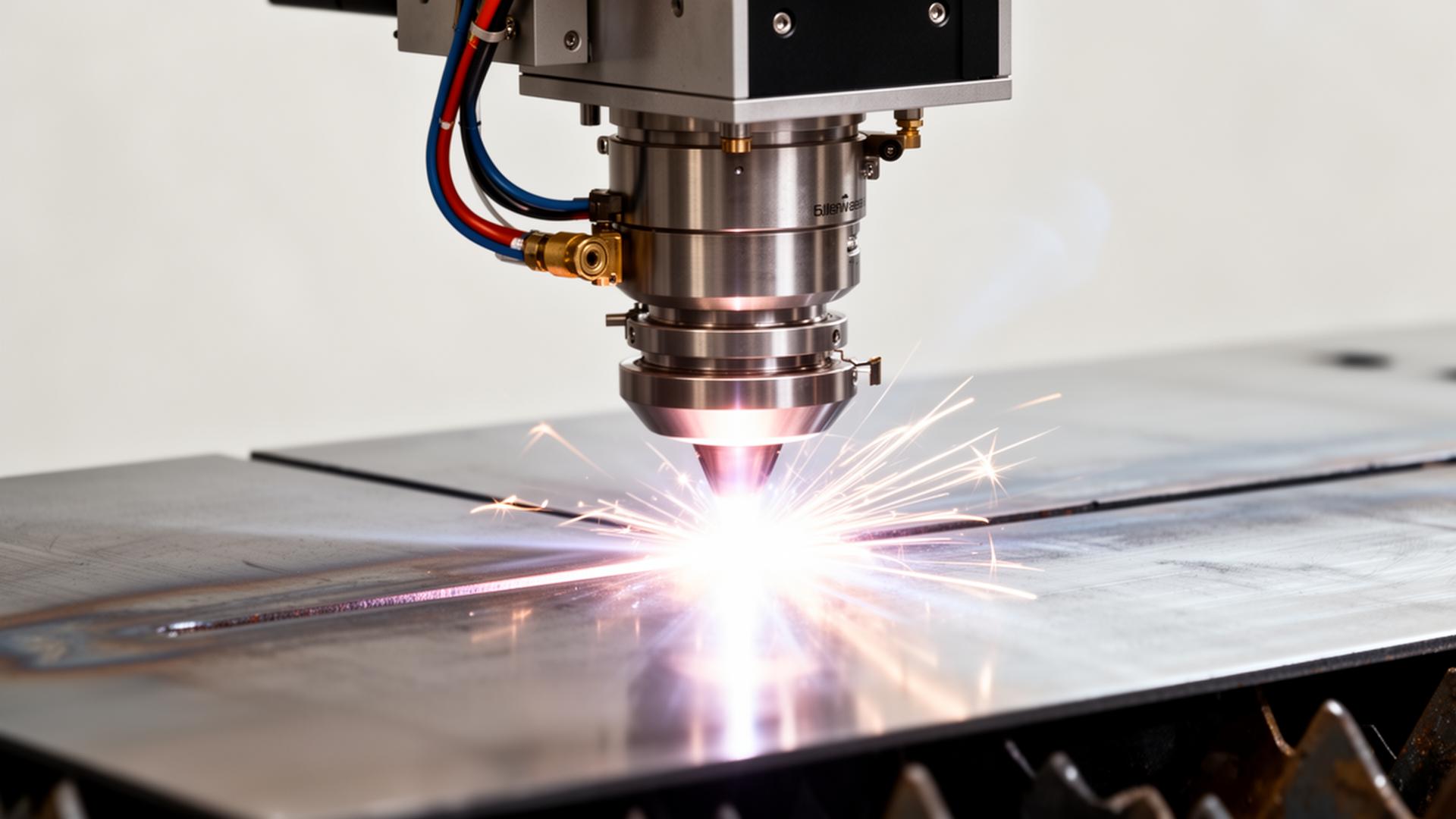
Brackets, panels, enclosures, plate: if your work comes off a table, you want a dedicated sheet metal laser cutting machine. Beds run from 5'×10' compact to 8'×24' extreme duty; the part comes off weld-ready, bend-ready, paint-ready.
Tube, pipe, and structural? Tube laser.
If you're feeding bandsaws and drill presses today, a tube laser cutting machine replaces the saw, the drill, the cope, and the deburr station in one pass: round, square, and structural, from single-phase entry machines to 60-foot 3-chuck lines.
Real volume in both? Combo, or two machines.
A combo sheet-and-tube laser is the most economical way to get both capabilities: one machine, one footprint, one operator. The honest caveat: a combo trades some throughput against dedicated machines. It's the right call when you're entering the laser business, not when either side of the work is already full-time.
How Many Kilowatts Do You Actually Need?
Here's the sizing rule the brochures won't give you: buy the machine that runs your everyday work at sixty to seventy percent of rated capacity. That's the duty cycle that lets a fiber resonator reach its roughly 100,000-hour service life.
Most buyers do the opposite. The big names are expensive, so shops buy exactly the power they need today, then redline it every shift, burn the resonator early, and end up on a first-name basis with the service department.
More power also means thicker material and faster cutting on everything below your maximum. A 12kW machine isn't just 'thicker' than a 6kW, it's faster through the same 10mm mild steel.
The most important decision in the purchase: when the price lets you, step up one power level and run the machine at a loaf instead of a sprint.
The Three Ways Shops Buy Lasers.
01 · The big names
Excellent machines and deep engineering. What you're weighing is the ownership model: a price that carries their overhead, service contracts run as a profit center, proprietary parts, and software renewals. You buy the machine once and the ecosystem forever.
02 · The low-cost imports
A sticker price that's hard to ignore, and real exposure behind it: lighter frames, mixed-supplier internals, and troubleshooting across an ocean at 2 a.m. If the machine is down four months out of twelve, the discount didn't happen.
03 · The third option: production-class without the overhead
This is the lane PB Lasers was built for: machines engineered to North American spec at roughly half the big-name price: nearly double the physical weight of many same-class imports, UL-listed Schneider electronics, an engineer-led install that ends when your team is producing, a year of consumables, permanently licensed software, and a two-year warranty. No service contracts. By design.
Decide Where Automation Fits. Even If It's Later.
A laser that waits for a forklift is a laser losing money. Before you pour the pad, think about material flow: where raw sheet lives, how it reaches the bed, and what happens to finished nests.
That's what a storage tower and load/unload system changes: 60%+ of your floor space back, changeover time down roughly 70%, and the ability to run lights-out overnight, the highest-margin hours in any fab shop.
Ten Questions to Ask Any Laser Vendor.
- / 01How long is the standard warranty, and does it start at install or at shipment?
- / 02What do consumables actually cost, and what ships with the machine? (Ask for year-one quantities in writing.)
- / 03Is the nesting/CAM software permanently licensed or a subscription? What happens if you stop paying?
- / 04Does the machine ship with its full rated power unlocked, or is capability metered behind a monthly fee?
- / 05Who does the installation: an engineer who has run fabrication, or a technician with a checklist and a flight to catch?
- / 06Is training done when the trainer leaves, or when your team is producing real parts?
- / 07Are critical parts proprietary? What's the policy when a head or lens assembly is discontinued?
- / 08Are the electronics UL-listed, and can you get full electrical schematics?
- / 09What does the machine weigh compared to others in its class? (Weight is your first structural quality signal.)
- / 10Who answers the phone after the install, and from what time zone?
The Questions Every First-Time Buyer Asks.
The best fiber laser cutting machine is the one sized to your actual work: your materials, thicknesses, part mix, and floor space. It also needs an ownership model you can live with: warranty length, consumables pricing, software licensing, and who installs and trains. A brochure can't tell you that; an engineering review of your operation can.
Size the machine so your everyday work runs at 60–70% of rated capacity. Higher power cuts thicker material faster, but a machine you redline every shift wears out early, while one loafing at 60% protects its roughly 100,000-hour resonator life. Many shops are best served buying one power level above their brochure answer.
Buy for the work you quote most: a dedicated sheet laser for flat work, a dedicated tube laser for high-volume tube and structural work, and a combo (sheet + tube) machine when you need both capabilities on one budget and one footprint. A combo is the most economical way to enter the laser business; dedicated machines win once either side of the work becomes full-time.
They're a different machine category, not a cheaper version of the same thing: often roughly half the frame weight of a production-class machine, mixed-supplier components, and support based overseas. Some shops accept that risk knowingly. The mistake is comparing them to production-class machines on sticker price alone.
A properly sized fiber laser resonator has a service life of roughly 100,000 hours when the machine runs at 60–70% of rated capacity. That's decades of single-shift use, which is why sizing and duty cycle matter more than any single spec.
Not if the machine and the training are right. PB Lasers sells no service contracts by design: an engineer installs the machine and trains your team until you're producing, parts are non-proprietary and available, and the standard warranty runs two years. You pay more upfront for independence, not forever for dependency.
We Size Machines on a Call. Not on a Product Page.
Our mission is to bring productivity back to North American manufacturing.
Choosing the right machine is the first step.